August 8, 2009

MAC OS


"MACOS" redirects here. For the American humanities teaching program, see Man: A Course of Study.

Mac OS X v10.5- the latest release of Mac OS X.
Mac OS 9- the last release of the classic Mac OS.
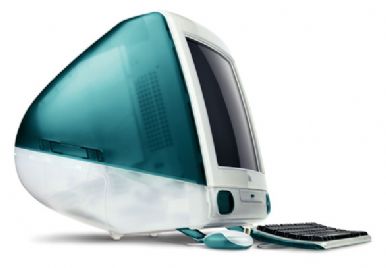
Mac OS logoMac OS is the trademarked name for a series of graphical user interface-based operating systems developed by Apple Inc. (formerly Apple Computer, Inc.) for their Macintosh line of computer systems. The Macintosh user experience is credited with popularizing the graphical user interface. The original form of what Apple would later name the "Mac OS" was the integral and unnamed system software first introduced in 1984 with the original Macintosh, usually referred to simply as the System software. It was a trimmed-down version of the operating system underpinning Apple's earlier Lisa product.

Apple deliberately downplayed the existence of the operating system in the early years of the Macintosh to help make the machine appear more user-friendly and to distance it from other operating systems such as MS-DOS, which was more arcane and technically challenging. Much of this early system software was held in ROM, with updates typically provided free of charge by Apple dealers on floppy disk. As increasing disk storage capacity and performance gradually eliminated the need for fixing much of an advanced GUI operating system in ROM, Apple explored cloning while positioning major operating system upgrades as separate revenue-generating products, first with System 7 and System 7.5, then with Mac OS 7.6 in 1997.
Versions
The early Macintosh operating system initially consisted of two pieces of software, called "System" and "Finder", each with its own version number.[1] System 7.5 was the first to include the Mac OS logo (a variation on the original Happy Mac startup icon), and Mac OS 7.6 was the first to be named "Mac OS" (to ensure that users would still identify it with Apple, even when used in "clones" from other companies).

Until the advent of the later PowerPC G3-based systems, significant parts of the system were stored in physical ROM on the motherboard. The initial purpose of this was to avoid using up the limited storage of floppy disks on system support, given that the early Macs had no hard disk. (Only one model of Mac was ever actually bootable using the ROM alone, the 1991 Mac Classic model.) This architecture also allowed for a completely graphical OS interface at the lowest level without the need for a text-only console or command-line mode. A fatal software error, or even a low-level hardware error discovered during system startup (such as finding no functioning disk drives), was communicated to the user graphically using some combination of icons, alert box windows, buttons, a mouse pointer, and the distinctive Chicago bitmap font. Mac OS depended on this core system software in ROM on the motherboard, a fact that later helped to ensure that only Apple computers or licensed clones (with the copyright-protected ROMs from Apple) could run Mac OS.

The Mac OS can be divided into two families:

The Mac OS Classic family, which was based on Apple's own code
The Mac OS X operating system, derived from UNIX.

Solaris (operating system)


Solaris is a UNIX-based operating system introduced by Sun Microsystems in 1992 as the successor to SunOS.

Solaris is known for its scalability, especially on SPARC systems, and for originating many innovative features such as DTrace and ZFS.[1][2] Solaris supports SPARC-based and x86-based workstations and servers from Sun and other vendors, with efforts underway to port to additional platforms.

Solaris is certified against the Single Unix Specification. Although it was historically developed as proprietary software, it is supported on systems manufactured by all major server vendors, and the majority of its codebase is now open source software via the OpenSolaris project

Company / developer Sun Microsystems
OS family UNIX
Working state Current
Source model Mixed open source / closed source
Latest stable release 10 5/09 / 2009-04-29; 3 months ago
Supported platforms SPARC, x86, x86-64
Kernel type Monolithic kernel
Default user interface Java Desktop System or CDE
License Various
Website http://sun.com/solaris/

Windows 7


----
Windows 7 (formerly codenamed Blackcomb and Vienna) is an upcoming version of Microsoft Windows, a series of operating systems produced by Microsoft for use on personal computers, including home and business desktops, laptops, tablet PCs and media center PCs.[2] Windows 7 was released to manufacturing on July 22, 2009,[3] with general retail availability set for October 22, 2009,[4] less than three years after the release of its predecessor, Windows Vista. Windows 7's server counterpart, Windows Server 2008 R2, is slated for release at the same time.

Unlike its predecessor, which introduced a large number of new features, Windows 7 is intended to be a more focused, incremental upgrade to the Windows line, with the goal of being fully compatible with applications and hardware with which Windows Vista is already compatible.[5] Presentations given by the company in 2008 focused on multi-touch support, a redesigned Windows Shell with a new taskbar, a home networking system called HomeGroup,[6] and performance improvements. Some applications that have been included with prior releases of Microsoft Windows, including Windows Calendar, Windows Mail, Windows Movie Maker, and Windows Photo Gallery, will not be included in Windows 7;[7][8] some will instead be offered separately as part of the free Windows Live Essentials suite.
Screenshot of Windows 7 Ultimate
Developer
Microsoft
Website Official website
Releases
Release date RTM: July 22, 2009
Retail: October 22, 2009 (info)
Current version 6.1 (Build 7600)
(7600.16385.090713-1255[1])
(2009-7-22; 17 days ago) (info)
Source model Closed source / Shared source
License MS-EULA
Kernel type Hybrid
Update method Windows Update
Platform support IA-32, x86-64
Support status
Mainstream support
Further reading
Development of Windows 7
Features new to Windows 7
Features removed from Windows 7
Windows 7 editions

Minimum hardware requirements for Windows 7[71] Architecture 32-bit 64-bit
Processor speed 1 GHz processor
Memory (RAM) 1 GB of RAM 2 GB of RAM
Graphics card Support for DirectX 9 graphics device with 128MB of graphics memory (for Windows Aero)
HDD free space 16 GB of available disk space 20 GB of available disk space
Optical drive DVD drive (only to install from DVD/CD Media)

August 6, 2009

TOP 10 POLICE CARS 5-1

-----

5: Subaru Impreza WRX
Another boy racer car making it big with UK cops is the Subaru Impreza WRX. And with good reason. Because like the Evo, the WRX is perfect for Britain’s narrow, twisty country roads. If you’ve ever watched reality TV cop shows, most police chases are flummoxed the moment the hoodlums head off road. However, they won’t shake off the WRX, like this last-generation one here that is in use by the Humberside force. As with the Evo, it uses a 2.0-litre turbo engine and grippy four-wheel-drive system to get it to 60mph in around 5.0 seconds and a top speed nearing 150mph.
But this Prodrive-enhanced WRX also has a sump guard fitted, allowing it to fly over speed humps at 70mph and travel off-road. It isn’t quite as sophisticated as the Evo, nor as hardcore and compromising, but it is one police car you don’t want to see approaching from behind at full speed.
--

4: Mitsubishi Evo VIII
Yes, Mr Joyrider, try outrunning this. It’s a Mitsubishi Evo VIII, one of the sharpest and deadliest driving tools you’re likely to find the cops driving in the UK. With permanent four-wheel-drive and a throbbing 2.0-litre turbo engine, there are few cars that have the pace and the grip to outrun it, so if you see one in your rear view mirror, do the sensible thing. Pull over. The 275bhp Mitsubishi will out handle any supercar, thanks to a bizarre system called Super Active Yaw Control, which uses the latest Japanese electronics to keep the car stable, balanced and grippy through corners.
----
3: Porsche 911 TechArt
Next time you’re tearing along the Autobhan and forget to slow down for a restricted area, just be aware that the German police have a fleet of Porsche 911s at their disposal, the granddaddy of them all being this TechArt-enhanced 911 Carrera S. And you really don’t want to mess with it. The 3.8-litre engine has been tuned by TechArt to give 367bhp – that’s enough to get it to 60mph in 4.7 seconds and on to a 186mph max – or in other words, unless you’re in a supercar and you’re slightly unhinged, you don’t stand a chance
2: Ferrari 250 GT
Believe anything Hollywood says and you’ll already be thinking all the cool coppers drive around in Ferraris – they certainly do in Magnum, Miami Vice and Bad Boys 2. But back in the ‘60s the Italian police drove one for real. The lucky driver’s name was Marshal Armando Spatafora, something of a legend in Rome it seems, and his car was a 250 GTE. Together, they patrolled the streets of Rome for nearly a decade, hunting down serious criminals in the kind of heroic chases Hollywood directors would kill for.
For its day, the car was seriously quick, with a 240bhp engine that could sling-shot it speedily round the tight Roman streets. As you’d expect, no car of the day stood a chance, especially as the GTE shared its roots with the 250 GTO, one of Ferrari’s finest supercars and racers. The 250 GTE was also the first mass-produced four-seat Ferrari, so there was actually a bit of space to stick any arrestees. But it looked so damn cool you’d probably want to commit some crime just to see it in action. These days it's as rare as a straight politician but the actual car used still survives in a museum of police cars in Rome.

1: Lamborghini Gallardo
From the country that has the world’s greatest concentration of supercar manufacturers comes the world’s fastest cop car. Yes, the lucky Italian cops have a Lamborghini Gallardo at their disposal, a genuine police car used by the Italian Carabinieri to patrol the Salerno-Reggio Calabria highway outside Rome. Prime hunting ground indeed, because its 5.0-litre V10 will grant it 193mph flat out and a tarmac-ruining 0-60mph time of around four seconds. But it isn’t just a patrol car for chasing wrung-out Fiats, Alfa Romeos and the occasional Ferrari. The Police-liveried Gallardo also doubles as a super-fast response car, with the ability to be the first on the scene of a serious accident.
It carries life saving medical equipment such as a defibrillator to revive car crash victims, and is used as a high-speed shuttle to transport organs between hospitals. Best of all is that with four-wheel-drive sending all 500 horses into the road, the Gallardo patrol car can be used all year round in all weathers.

TOP 10 POLICE CARS 10-6

--
Here are 10 panda cars you don’t want to mess with. Because while squad cars like the Vauxhall Omega and Volvo estate are a regular sight on our roads, some police jobs require something a little more potent and special.
From Lamborghini Gallardos in Italy to Mitsubishi Evos in the UK, we take a look at the best patrol cars in the world – and hope we never run into one…
-
10: Lotus Esprit S4
Italy might have Lamborghini and Ferrari, but England has Lotus and the Esprit S4 is arguably up there with these lusted-after exotics. With the engine in the middle, drive channelled to the rear wheels and a 3.5-litre V8 providing forward momentum, the Esprit is a seriously swift machine and, as a police car, it is as deadly as a rusty scalpel. Unfortunately, it is believed the Esprit in these pictures was nothing more than a publicity stunt to promote sales, and normally we would leave it out, but the idea of a Lotus Esprit police car is too good to overlook.

---
9: Rover SD1
In the ‘70s and ‘80s the Rover SD1, complete with blue lights and stripes, was a familiar sight on UK roads – and a formidable foe for any criminals stupid enough to cross it. Police forces favoured the range-topping 3.5-litre V8 for obvious reasons, proving so suitable for their needs they stockpiled SD1s when it went out of production in 1986. Made popular from TV shows like The Professionals and The Bill, it has enjoyed a cult following in the UK since, but rust problems mean few exist today. Confusion remains over its name: some people claim it's called SD after Solihull Design (where it was built), others speculate that it was abbreviated from Specialist Division, hinting at its ability. All we know is that it's great.

-----
8: Skoda Octavia vRS
Erm, have we lost our minds including a Skoda Octavia among our 10 best police cars ever? No, because this vRS version is about as understated as a Vauxhall Astra beat car, but a lot more potent. It’s the previous Octavia which gets a 180bhp turbocharged 1.8-litre petrol engine, enough oomph to speed it to 60mph in under eight seconds and on to 140mph. You’re unlikely to see one dressed up as a jam sandwich, like in our photos, though. So discreet is the vRS that many police forces use it as an undercover car, lulling speeding motorists into a false sense of security, then pouncing like a hungry lion. Look out for the lights in the grille and extra aerials on the roof

----
7: Spyker C8
The Dutch have liberal views when it comes to drugs and sex, but they’re deadly serious when it comes to high performance cop cars. As you can see here. This is the Spyker C8, a Dutch-built supercar that, as a promotional exercise, was converted into one of the craziest police cars we’ve ever seen. If it were actually in use it could reel in speeding supercars fairly easily given that under its light skin sits a 395bhp 4.2-litre V8 engine that promises 0-60mph in 4.5 seconds and a top speed of 187mph. Only slightly slower were the Porsche 911 partol cars used by the Dutch highway patrol in the 1980s.

---
6: BMW 5-Series
Compared to some of the other cars on this list, the BMW 5-Series isn’t quite as exotic or exciting. In fact, with a 3.0-litre turbodiesel engine you might even argue that it’s bordering on boring. But you’d be missing the point because this is one of the greatest cars the police have at its disposal and as such is a favourite in police garages across the country. The Metropolitan Police’s S019 armed response team, for instance, use it for its tremendous potential, space for four or five tooled-up men and a boot big enough to house a small army’s arsenal.
Best of all is that it will get about 35mpg, making it reasonably economical. So at least all our hard-earned tax money isn’t being spent on fuel.

----

August 5, 2009

The Elecom 10 Port USB Hub


I’ve never really had a ton of USB items that needed plugged in, but even with as few as I have, it can be extremely frustrating when you run out of ports. Then you get an extra hub and of course, that one fills up eventually. So although you may not really need 10 different USB ports, you’re just giving yourself the option to have a lot plugged in at once. It’s always better to have too many USB ports rather than too few.


The Elecom Compact 10 Port USB Hub would definitely leave plenty of breathing room to grow. Which would be especially nice for those that have a family computer. You could leave more plugged in and not have to worry about anyone fighting over who gets to use the spare port to charge their camera or iPod. The USB Hub comes in three different colors, you can purchase it in either black, silver or white. You can find it for ¥ 9,500.00 or about $101 from Geek Stuff 4 U, which might be a little more than some are willing to spend just for a little extra convenience.

P@W for added convenience


--
If your workplace allows you to bring your pooch with you, then you might want to consider the $178 P@W device. It is in essence, a pet back-pack, laptop computer carrier and foldable pet crate merged into a single contraption, letting you tote your precious four-legged friend around in safety with your laptop in tow without keeping both your hands occupied. We just wonder what happens if your pooch has put on a fair number of pounds over the years, otherwise your back might suffer and curse you for it when coupled with a heavy laptop inside.
buy it here

The USB Bulb Flash Drive


If you’re looking to hide your USB drive, this is one way to do it while still leaving it out in the open. Although it’s not going to fool anyone into believing it’s a working light bulb, no one would guess without looking closely that it’s actually a flash drive. Of course looking closely you can start to see the top of the drive, since the bulb is completely clear. You won’t have to worry about losing it either since it easily attaches to your keychain.


The end of the bulb screws over top of the drive, to keep it well protected and secure. They don’t say what the bulb itself is made out of, but I would hope that it’s a durable plastic since it is going to dangle along with your keys. The drive can be purchased in three different sizes, 2GB, 4GB and finally 8GB. None of which are too horribly priced either. The smallest is $19, the 4GB is $22 and the largest is $32 from Brando.

United Launch Alliance Successfully Launches NASA/NOAA Weather Satellite


Cape Canaveral AFS, Fla., (June 27, 2009) – United Launch Alliance, on behalf of Boeing Launch Services, successfully launched the second of three next-generation Geostationary Operational Environmental Satellites (GOES) for NASA and the National Oceanic and Atmospheric Administration (NOAA). The satellite, designated GOES-O, was launched aboard a Delta IV expendable launch vehicle from Space Launch Complex-37 at 6:51 p.m., EDT. The first GOES satellite in the series, designated GOES-N, was launched here on May 24, 2006. This was the 8th ULA launch of 2009. Following a nominal four hour, 21-minute flight, the Delta IV deployed the spacecraft. The multi-mission GOES series of satellites will provide NOAA and NASA scientists with data to support weather, solar and space operations, and will enable future science improvements in weather prediction and remote sensing. Additionally, GOES-O will provide data on global climate changes and capability for search and rescue. “ULA congratulates Boeing and its NASA and NOAA customers for the successful launch of GOES-O, which will improve weather forecasting across the globe,” said Jim Sponnick, ULA vice president, Delta Product Line. “Millions of people a year are adversely affected by weather ranging from localized thunderstorms to tornados and hurricanes. GOES-O will significantly improve the data collection scientists need to learn more about our planet’s weather and will better prepare people all over the world for significant weather events.” The Delta IV Medium+ (4,2) configuration launch vehicle used a single common booster core with a Pratt & Whitney Rocketdyne RS-68 main engine, two Alliant Techsystems GEM 60 solid rocket motors, a PWR RL10B-2 upper stage engine and a four-meter diameter upper stage and composite payload fairing. The GOES-O launch marked the fourth flight of the Delta IV medium+ (4,2) configuration and the 10th flight of the Delta IV family of launch vehicles. ULA's next launch, currently scheduled for no earlier than Aug. 12, is the PAN mission for the Department of Defense aboard an Atlas V from Space Launch Complex-41 at CCAFS

Bc Rich Wmd Widow Electric 5 String Bass £499.00


Product Info
The WMD Widow 5-string Bass is designed to do some serious low end damage. Armed with fat sounding P-style pickups, active electronics, Grover Rotomatic tuners and solid neck-through construction there is no mistaking this Weapon of mass Destruction!

Key features and specifications
Construction: neck through
Body wood: nato (eastern mahogany)
Body thickness: 45mm
Top style: side beveled
Body binding: no
Headstock style: Widow
Headstock color: onyx
Headstock binding: no
Tuners: Grover Rotomatics
Neck wood: maple
Back of neck: onyx
Neck binding: no
Fretboard: ebony
Inlay: none
Frets: 24 jumbo 2.9mm
Factory strings: 45 – 130
Scale: 35”
Bridge / Tailpiece type: adjustable stop
Pickups: 2 active EQ black P style
Controls: 2 volumes and 2 tones (center detent)
Hardware: black chrome
Finish: painted glossy
Color: onyx with red pinstripes on the body edges

Follow this link if you are intrested
http://www.turnkey.co.uk/product.php?itemid=3252

Dynaudio Bm9s Sub Woofer


Product Info
The Dynaudio BM 9S subwoofer is intended to operate with the BM series monitors, more specifically, the Dynaudio BM 5A monitor. It is extremely well-suited for that extra punch to the bottom in setups where space is limited. The Dynaudio BM 9S delivers a clear, crispy and surprisingly powerful punch when you take its almost diminutive size into account. The Dynaudio BM 9S will complement stereo and multichannel monitoring equally well and when daisy-chaining of subwoofers is needed, it sports a low level LFE input/output.

Dynaudio BM 9S at a Glance:

Closed cabinet for a tight low-end punch.

The perfect size, especially when space is scarce.

Smart filters that will enhance the performance of your satellites.
Tight, Low-End Punch!
For significant control and enhancement of the general performance, the Dynaudio BM 9S is a closed cabinet type. This creates an internal pressure by which the woofer gains a considerable amount of precision when it comes to the reproduction of low frequent signals. This precision is easily audible and it augments the feeling of reality that the listener experiences.

The Perfect Addition to Your BM 5A System!
The Dynaudio BM 9S is designed according to the strict BM series specifications. With a 10" woofer and 200 Watts of power, and virtually minute dimensions, this sub is tailor-made to take care of even the most comprehensive challenges where space is scarce. Being every bit as versatile as the rest of the BM series, Dynaudio BM 9S is a very competent partner for smaller stereo and multichannel setups, giving a very powerful system for even the most demanding users across the globe. The Auto On/Off function, provides a minimized idle energy usage by shutting off after minutes of no input signal. The auto sensing circuit enables BM9S to automatically come to life when input signal is detected.

Get More From Your Satellites
The satellite filters that this sub sports, provides high-pass filtering of the monitor source signal allowing 60Hz or 80Hz corner frequencies. This is a huge advantage for the monitor performance, as the satellites do not need to deal with power consuming lower frequencies. This leaves all the satellite power to greatly accelerate performance and precision.

Key features and specifications
10" woofer.

Phase adjustment in 0° / 180°.

Auto on/off, power LED.

Mode selection, LFE or slave.

Adjustment of low-pass corner frequencies (50-150Hz)

SAT/SUB high-pass adjustment, Flat, 60 Hz, 80 Hz.

Small dimensions: 11.6" X 11.4" X 12.5".

200 W @ 4 Ohms.

Discrete LFE input, slave output for linking.

Closed cabinet for extremely precise low frequency reproduction.

Gateway rolls out LT3100 netbook


Another day, another netbook arrives on the scene. Gone are the heady days where the first Eee PC 700 rolled out with much fanfare - these days, anyone and everyone is jumping aboard the netbook bandwagon and to no surprise - sales of this particular market has been extremely encouraging to say the least, and it doesn’t look set to decline anytime soon, so why not? Gateway is another computer manufacturer who has dived into the netbook market with the LT3100 being their latest addition to their stable. This will be the first 11.6″ netbook from them that is powered by an AMD Athlon processor, tipping the scales are a weightier 3.14 pounds while measuring no more than an inch thick. The sleek and compact design adopted by the Gateway LT3100 allows you to bring it just about anywhere without having the fashion police chase you down.


For those who do not yet have an unlimited data plan and an EV-DO USB modem, fret not as the Gateway LT3100 helps you remain connected at all times thanks to its Wi-Fi capability, although it doesn’t support 802.11n, it does handle Wi-Fi 802.11b/g pretty well, enabling you to keep in touch with family and friends through a variety of methods including emails, updates on social networks and online entertainment. What makes the Gateway LT3100 outstanding is its Ultrabright high-definition widescreen display that measures 11.6″ across diagonally, making you scroll less as it packs in more line across the cross section each time you open up a document. After all, it also crams in a 16:9 aspect ratio that is entertainment friendly, packing in 1,366 x 768 (WXGA) pixel resolution for incredibly clear and crisp images. Not only that, the larger display sizes makes room for a full-size keyboard within that makes typing a whole lot easier.

Surprisingly enough, Gateway has priced their LT3100 at a mere $399.99, where each purchase comes with a one-year warranty, preinstalled Microsoft Works with Office Home and Student 2007 Trial, Gateway Recovery Management, Adobe Reader, and Norton Internet Security 2009 Trial software

August 2, 2009

Intel core i7


-----------------------------------------------
Intel Core i7 is a family of several Intel desktop x86-64 processors, the first processors released using the Intel Nehalem microarchitecture and the successor to the Intel Core 2 family. All three current models and two upcoming models are quad-core processors.[1][2][3][4] The Core i7 identifier applies to the initial family of processors[5][6] codenamed Bloomfield.[7] Intel representatives state that the moniker Core i7 is meant to help consumers decide which processor to purchase as the newer Nehalem-based products are released in the future.[8] The name continues the use of the Core brand.[9] Core i7, first assembled in Costa Rica,[10] was officially launched on November 17, 2008[11] and is manufactured in Arizona, New Mexico and Oregon, though the Oregon plant is moving to the next generation 32 nm process

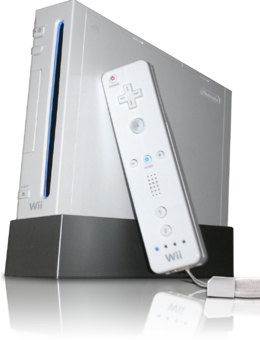
Nitendo Wii


The Wii (ウィー, Uī?, pronounced /ˈwiː/, like the pronoun we) is a home video game console released by Nintendo. As a seventh-generation console, the Wii primarily competes with Microsoft's Xbox 360 and Sony's PlayStation 3. Nintendo states that its console targets a broader demographic than that of both.[6] As of December 31, 2008 the Wii leads the generation over the PlayStation 3 and Xbox 360 in worldwide sales.[1]

A distinguishing feature of the console is its wireless controller, the Wii Remote, which can be used as a handheld pointing device and detect movement in three dimensions. Another distinctive feature of the console is WiiConnect24, which enables it to receive messages and updates over the Internet while in standby mode.[7]

The Wii is Nintendo's fifth home console, the direct successor to the Nintendo GameCube, and able to play all official GameCube games. Nintendo first spoke of the console at the 2004 E3 press conference and later unveiled the system at the 2005 E3. Satoru Iwata revealed a prototype of the controller at the September 2005 Tokyo Game Show.[8] At E3 2006, the console won the first of several awards.[9] By December 8, 2006, it had completed its launch in four key markets.

Technical specifications
Nintendo has released few technical details regarding the Wii system, but some key facts have leaked through the press. Though none of these reports has been officially confirmed, they generally point to the console as being an extension or advancement of the Nintendo GameCube architecture. More specifically, the reported analyses state that the Wii is roughly 1.5 to 2 times as powerful as its predecessor.[2][88] Based on the leaked specifications, the Wii is the least powerful of the major home consoles in its generation. The Wii uses a storage system similar to the GameCube, which uses "block" units rather than bytes. The conversion from blocks to bytes is roughly 8.12 blocks to one megabyte.

Processors:

CPU: PowerPC-based "Broadway" processor, made with a 90 nm SOI CMOS process, reportedly† clocked at 729 MHz[89]
GPU: ATI "Hollywood" GPU made with a 90 nm CMOS process,[90] reportedly† clocked at 243 MHz[89]
Memory:

88 MB main memory (24 MB "internal" 1T-SRAM integrated into graphics package, 64 MB "external" GDDR3 SDRAM)[91]
3 MB embedded GPU texture memory and framebuffer.
Ports and peripheral capabilities:

Up to four Wii Remote controllers (connected wirelessly via Bluetooth)
Nintendo GameCube controller ports (4)
Nintendo GameCube Memory Card slots (2)
SD memory card slot (supports SDHC cards as of System Menu 4.0)
USB 2.0 ports (2)
Sensor Bar power port
Accessory port on bottom of Wii Remote
Optional USB keyboard input in message board, Wii Shop Channel, and the Internet Channel (as of 3.0 and 3.1 firmware update)[92]
Mitsumi DWM-W004 WiFi 802.11b/g wireless module[93]
Compatible with optional USB 2.0 to Ethernet LAN adaptor
MultiAV output port for component, composite and S-Video
Built-in content ratings systems:

BBFC, CERO, ESRB, OFLC, OFLC (NZ), PEGI, USK
Storage:

512 MB built-in NAND flash memory
Expanded storage via SD and SDHC card memory (up to 32 GB)
Nintendo GameCube Memory Card (required for GameCube game saves